Early AccessTeam Memory Layer

Shared, validatedmemory forAI coding agents

mex gives your whole team one shared memory layer for AI coding agents. Validated against your real code and kept in sync across every developer.

The open-source mex CLI is live today. Try it on GitHub

The problem

On a team, AI memory quietly falls out of sync.

Each engineer's AI agent learns the codebase its own way, so the team quietly splits onto different paths. Memory fragments across machines, drifts from the real code, and no one sees the gap until it ships as inconsistent code.

01 / Fragments

Every agent knows something different

Each developer's agent learns the codebase on its own, so no two share the same memory. Two agents solve the same problem different ways, and the conflict only surfaces in review, after it's already in the PR.


02 / Goes stale

Memory drifts from the code

The codebase changes every day; the per-developer memory does not. Agents keep enforcing rules that no longer match what's shipped, and nothing flags the gap.

03 / Ungoverned

No one can see what agents know

There's no shared source of truth and no way for a lead to review, correct, or govern the memory every agent is working from. The team's standards end up living in tools leadership can't see into.

The Solution

One shared memory, governed and tool-neutral.

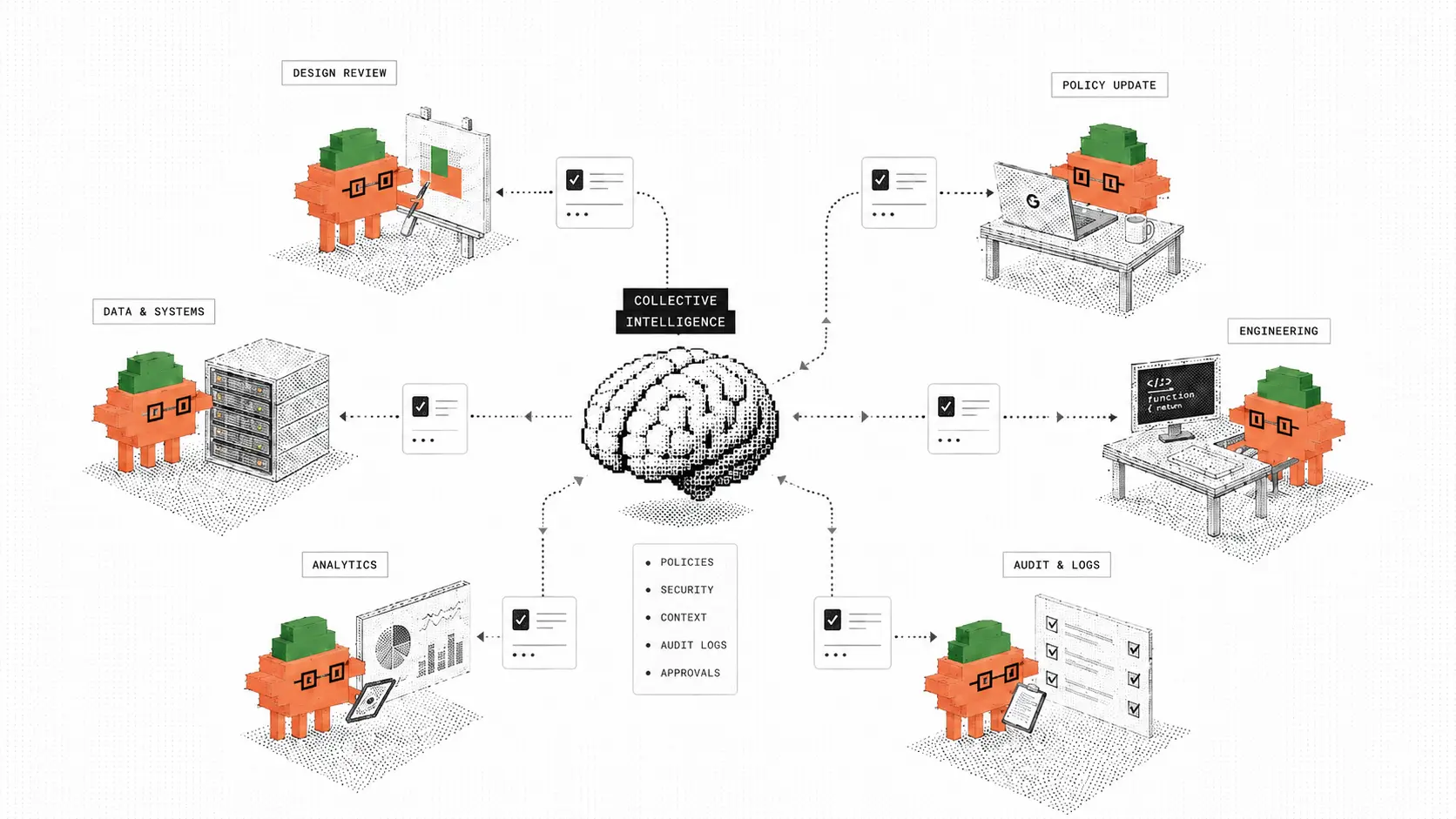
Every developer and every agent works from one shared, server-hosted memory. A team admin governs what gets promoted, and each developer still keeps their own local context.

mex team memory modelAn admin dashboard governs a shared, server-hosted collective context. Four developers each push to and pull from the collective context, which is compatible with every AI coding agent.

Admin dashboard

governs sync, drift, access, and policy

Collective context

shared · server-hosted

backend services
frontend app
platform & infra
mobile client
PushPull
PushPull
PushPull
PushPull
Works with every agent your team uses
Cursor
Claude Code
Codex
OpenCode
+ any agentic tool

Individual context, received per dev.

The dashboard

Govern your team's memory from one place.

See every agent's drift score at a glance, review what gets promoted into shared memory, and keep the whole team's context honest, without leaving the dashboard.

  • Aggregate drift scores across every developer and repo
  • Review and approve what gets promoted into shared memory
  • Catch stale context in coverage gaps before it spreads
mex dashboard showing team memory governance
Who it's for

Built for teams who ship with AI.

mex is vendor-neutral and works with the agents your team already uses, with a dashboard so leads can keep shared context honest as the team grows.

ENGINEERING TEAMS

  • One shared memory instead of conflicting rules files
  • Every agent ships consistent, on-convention code
  • New hires inherit the team's context on day one
Two developers converging on shared memoryTwo developer figures angled inward with flow lines converging on a single shared peach memory block centered between them.

TEAM LEADS & ADMINS

  • See what every agent knows from one dashboard
  • Govern who promotes conventions and decisions
  • Catch drift before it spreads across the team
Team lead overseeing agent promotionA lead figure at top with sightline threads fanning down to three agent units. The centre agent promotes a peach memory block upward.

SCALING ORGANIZATIONS

  • Memory infrastructure that survives growth and turnover
  • Consistency across repos, squads, and tools
  • Reliable AI workflows at engineering-org scale
Team unit replicating at scaleThree team-units arranged on a receding diagonal. The front unit has a peach memory block; the two behind fade in opacity and use ink-outline-only blocks. A continuous thread links all three.
Updates & insights

Shipping in the open.

mex is open source and moving fast. Here's what's new in the CLI, and how we think about memory for AI coding teams.

Latest releases
v0.7.3Latest· latest · August 2026

Graph performance and recovery

Makes the code graph affordable to keep. Stores are roughly 40% smaller, graph builds hold one compiler program at a time, and interrupted builds can be repaired using mex graph repair.

v0.7.2· August 2026

Source-backed graph retrieval

Makes the code graph useful as a first-response retrieval system. mex graph scope now returns the most relevant source declarations and execution flows under a hard token budget.

v0.7.0· July 2026

Code-aware project memory

Adds a deterministic code knowledge graph beneath the existing markdown scaffold. Memory can now ground itself to exact code nodes using mex graph ground.

Writing

by mex · on mex

90% less noise, up to 70% fewer tokens: the numbers behind mex

On a set of retrieval tasks, mex returned answers that were 10x more compact than a grep-based baseline, while still finding everything it needed to find.

Read more

by mex · on LinkedIn

A million-token context window is not a million-token brain

Every few months, a new model arrives with a larger context window. But being present is not the same as being used.

Read on LinkedIn

by Daksh Jaitly · on X

Your AI Agent Has Amnesia. Here's the Fix.

Why every session starts cold, and the case for persistent, structured memory over giant context files.

Read on X
Why we built mex

We kept watching our agents drift apart.

We started like most teams: every developer keeping their own rules file, agents drifting apart within weeks. Corrections piled up, context went stale, and no one had a clear view of what our AI tools actually knew.

So we built mex: shared and validated memory for the whole team, governed in one place. AI-assisted development should get better as your team grows, not harder.

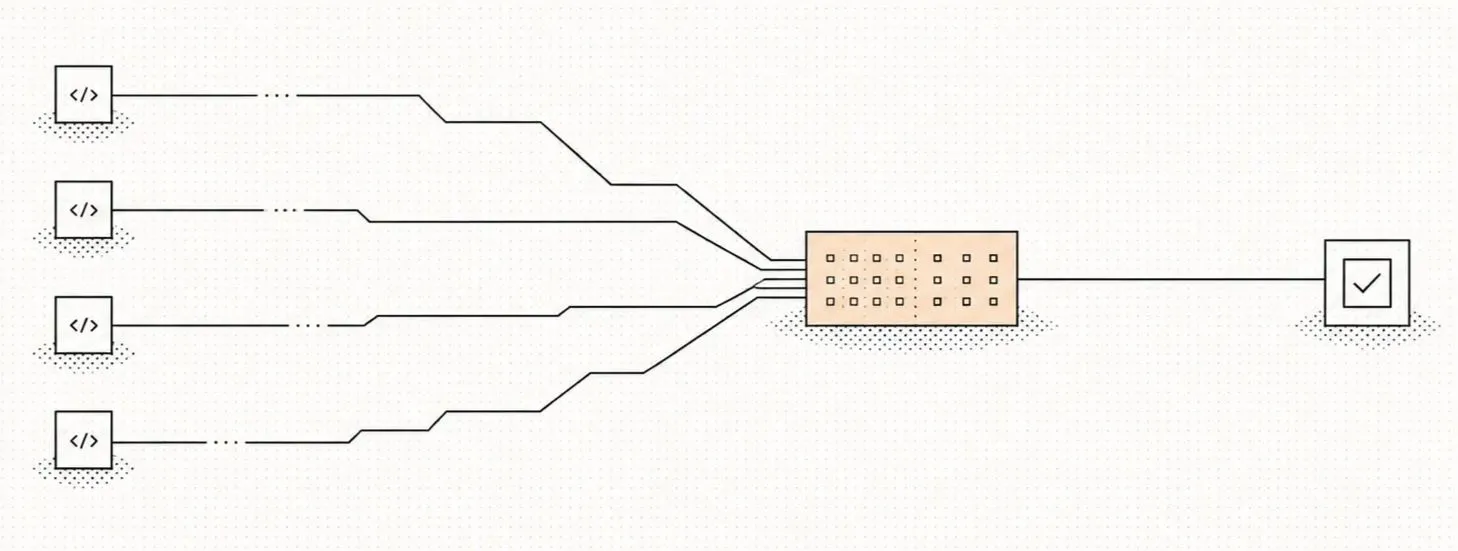
From scattered local rules to one shared source of truth.

Diagram showing fragmented agent memory converging into shared governed memory